|
||
Featured ArticleChildhood Obesity and Schools: Evidence from the National Survey of Children's Health.by: Ji Li, PhD and Neal H. Hooker, PhDThe international prevalence of childhood obesity and
obesity-related diseases has received increasing attention.1,2 Individual
physical and psychological health, and social and economic development are significantly
impacted by personal weight.3-7 Recent decades have seen an increasing
prevalence of childhood obesity. In the United States, childhood obesity is on
the rise; the percentage of obese children aged 6 to 11 more than doubled in
the past two decades, increasing from 6.5% in 1980 to 17.0% in 2006. The
percentage of obese adolescents aged 12 to 19 more than tripled, going from 5%
to 17.6% during the same period.8 Similar trends have been seen in other
countries. For example, in England, the level of overweight and obesity for
children aged 7 to 11 was less than 10% in the mid 1970s, but it exceeded 20% or girls
and 15% for boys in 1998.9 The percentage of obesity for children aged 2 to 6
increased from 1.5% in 1989 to 12.6% in 1997 in Chinese urban areas.10 Childhood
obesity is now a global challenge. Childhood obesity is more than a problem in children; it is linked to adult obesity and is accompanied by adverse health status.11 Overweight and obese children are increasingly diagnosed with type 2 diabetes and heart disease.5 Obesity not only impacts individual physical and psychological health, but also exerts a burden on social and economic development. Economic costs linked to obesity are high and are expected to continue to rise. One estimate suggests that the direct and indirect cost of obesity in the United States was about $139 billion in 2003... More |
Disclaimer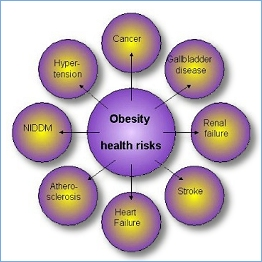 |
|
Make a Free Website with Yola.
